From Diffusion to Destination: What coding tells us about what comes next
• 1 minute read
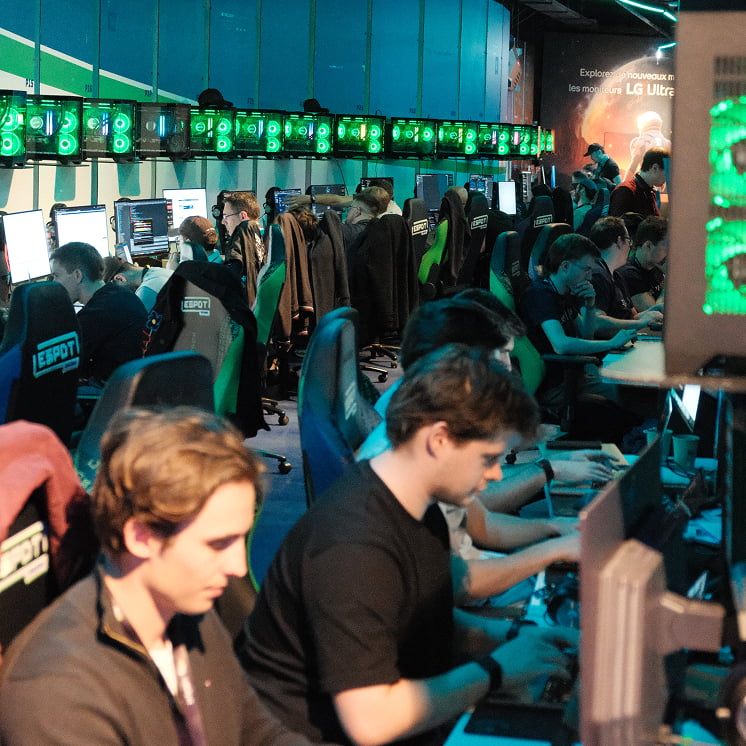
This year's Software Leadership Gathering, ‘From Diffusion to Destination’, brought together three vantage points that rarely meet in one room: the labs, the application and software vendors, and the technology investors - to discuss the pace of AI diffusion, the destination, and the next best move for a leader to make today.
Hearing them in conversation proved to be an effective way to filter signal from noise - a way of triangulating an informed view on the state of AI.
The 10 takeaways that follow are shaped by what Matthew Brockman, Chief Investment Officer, heard in those conversations.
They are what we believe that business leaders in the room - many of them building and shaping the software providers of the next wave - should leave with.
We started this gathering four years ago because we believed that putting the right people in the same room, with enough time to go deep, was the best way to keep pace with a technology moving faster than any of us can track individually. That belief has only strengthened.
1: We are entering the age of an agent for every knowledge employee
Advances in the scaffolding and harnesses mean that agents are no longer a developer tool. Not only will agents be soon used by every employee, they will become users of software themselves - accessing tools, making decisions and executing workflows on a person's behalf.
“Every single person in your company should be using agents...Our limitation is not models right now. Our limitation is imagination.” - Peter Steinberger, OpenClaw / OpenAI
2: Forget AGI, it’s about products built for AI
AGI cannot build and run a business. The idea that half the people in any given room won't be needed in the short term, is less accepted than it was a year ago. Once you stop targeting AGI, you start thinking about ROI - total cost of ownership, GPU requirements and token efficiency. Plan on the assumption that models will keep improving exponentially (and expensively), but not on the assumption that someone is about to hand you a digital workforce.
“Don’t rely on AGI. Build a good business. Don’t expect that you can outsource your strategy.” - Nick Frosst, Cohere


3: Token maxing is over. Use the right model (and incentives) for the task
Running cutting-edge models for every task makes no sense. The market price of tokens will emerge as labs reach public markets. Capability now is routing. And incentivising employees to maximize ROI (not usage). Same for business leaders – how will you allocate your divisional $s between labour and tokens in 2027 (and looking forwards.)
“There’s no world in which it will make sense to use the cutting-edge models for everything, or even for most tasks.” - Rob Toews, Radical Ventures.


4: AI’s real-world value today is 90+% in one vertical market - coding
Coding offers the vision of AI disrupting a sector - transferring meaningful share of enterprise value between incumbents (labour and software) and creating huge firms that didn't exist a few years ago.
The temptation is there to read across as new economy in miniature, a preview of what's coming across the rest of software, workflow and sectors. That's the bet being underwritten in some AI-native valuations and the Q1 SaaSpocalypse.
But the how, when, who is much more nuanced. Matthew unpacks this in full in Everything Everywhere But Not All at Once.

5: Durable opportunity sits in vertical software
Frontier model companies will pick their spots and win in some - but the last mile of any enterprise / SME market is hard, where deterministic outcomes based on data, domain and distribution are not synthesised easily. Today’s agentic software does not stop where yesterday’s code ended.
“The whole narrative of the SaaS apocalypse has been very overplayed and a lot of these public enterprise software companies have been oversold... There are so many vertical markets in which you can build great companies... that aren't big enough markets that Anthropic is going to zero in on it and like really focus on building a first party application there." - Rob Toews, Radical Ventures.
6: Future users of application software are mostly not human
Every SaaS application is now being approached by both humans and the agents acting for them. Permissions, data access, APIs and product surfaces need to address both. Platforms operating in this world are seeing agents make purchasing decisions, navigate workflows and execute tasks on a user's behalf - and are designed for that reality not retrofitted.
So are you ‘platform’ or ‘shovel’. Platform where the user orchestrates their work (and agents). Or shovel as the specialist tool that other systems and agents reach into to get specific work done. Both can be highly valuable. But they require clarity and different strategies.
“You’re going to have a new type of user. Agents will use your software, and they end up making the decisions.” - Fabian Hedin, Lovable.

7: To win in a vertical, be obsessed with user value
Vertical AI champions that look most defensible right now are not the ones that built or fine-tuned their own foundation model. They are the ones that built on top of the frontier and obsessed over user need. Address tasks, reduce complexity and user boredom. Position for the much larger market that AI is in the process of creating.
"We really believed that most of the value was going to be captured in the application and that we wanted to treat the model layer very much like an engine into our Formula One car. We wanted to own the chassis and the lawyer needs to feel like Lewis Hamilton." - Max Junestrand, Legora
8: Data is the differentiator and user fit is the moat
Operational data, generated through use of product in real application compounds. This applies as much to vertical software businesses as to physical AI. The model gets you to a baseline. The moat is built from the operational data your platform generates, which by definition no one else has. Every customer interaction, every workflow trace, every edge case captured in your system is the substrate of durable product differentiation (see recent post from Chris Kindt).
“Self-driving cars took a long time. When you look at what’s changed, the hardware is more or less the same, the algorithms are more or less the same. What’s changed is that the data is better.” - Antoine Bordes, Helsing

9: AI adoption is a top-down decision AND a bottom-up one
The biggest variables in how much value an organisation gets from AI is whether someone at the top is genuinely driving it AND employees are given the tools and guardrails to address the bits of their job (and the associated software) that they really hate. This is CEO's job today - walk the floor, asking what is on screen, insist on technical fluency as a condition of recruitment, manage the frictions of organisational change and compliance.
“You have to have a[n AI] maniac at the top.” - Nicolai Tangen, NBIM
"Give access to employees and let them automate what they think should be automated. It's very hard to know from the top." - Nick Frosst, Cohere
10. There is a lot of value creation still to happen
Coding is still 90+% of the value. The next few years are about those that can lead that diffusion elsewhere. Urgency, understanding and leadership will define winners.
“Life has never been more fun or more interesting. Technology continues to accelerate. No body has ever experienced this. You can wake up this morning and be depressed, or you can be optimistic”. - Nicolai Tangen, NBIM
A sincere thank you to everyone who joined us at SLG 2026: our speakers, for giving their time and sharing their thinking with such candour, and our portfolio leaders, for bringing the questions that made the conversations worth having.
Related Articles

Insight