

Orbit Podcast
Orbit 59
Marjorie Janiewicz of Mistral AI: flipping the adoption curve - why SaaS with data can win in an AI world
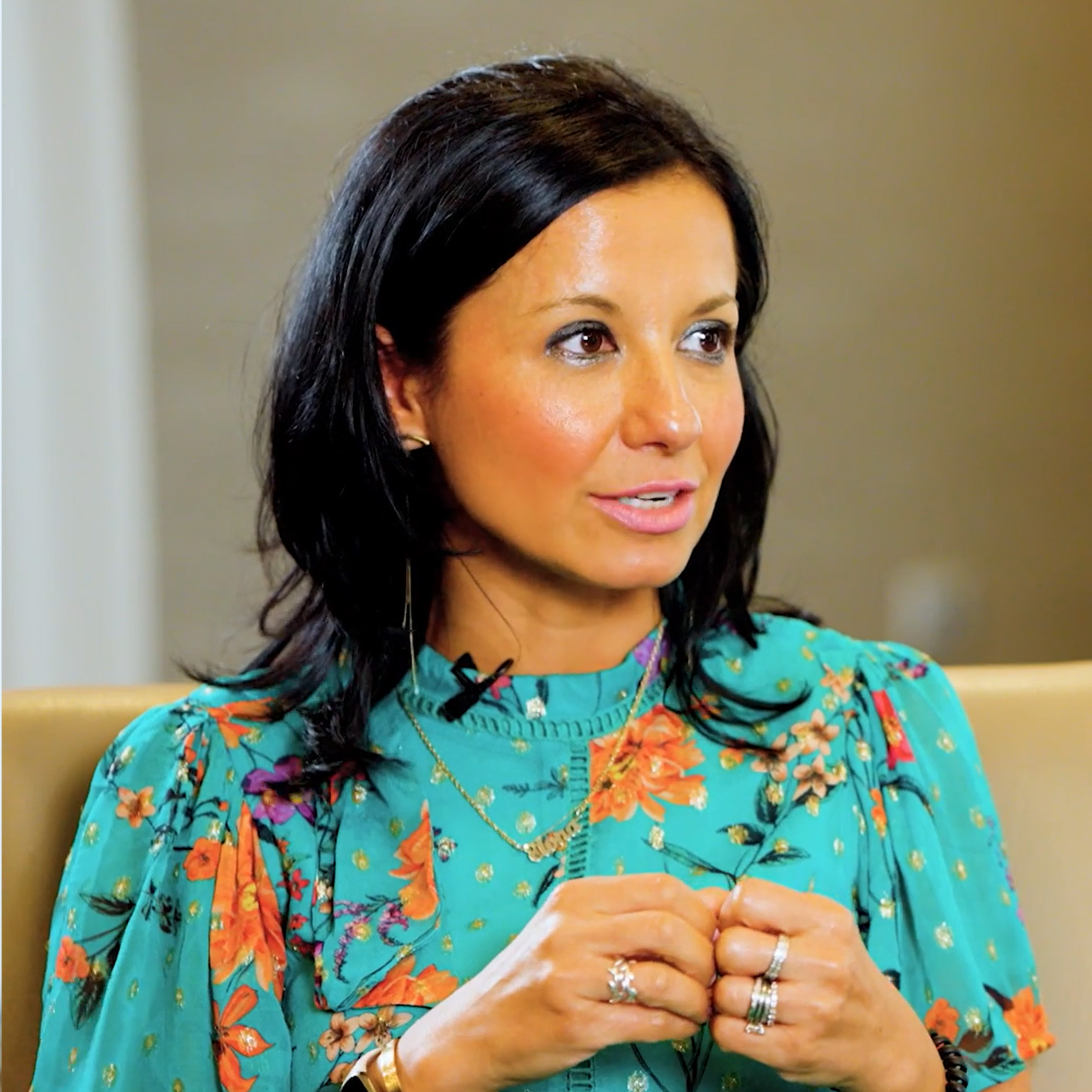
Marjorie Janiewicz has sold enterprise software through every platform shift for three decades: Oracle, MySQL, SAP, MongoDB, HackerOne. Now as Chief Revenue Officer at Mistral AI, she's taking a French startup from zero to $400 million in 18 months, closing deals with ASML and HSBC in under a year - timelines that used to take half a decade. Recorded in New York as Mistral announced its Finance offering, this conversation addresses what's working versus what's theatre in enterprise AI.
Marjorie supports the MIT hypothesis: 95% of AI projects never reach production. Chatbots drive adoption but don't change businesses. The 5% that work? They start with one high-impact use case, they customise models with proprietary data, and they deploy on-prem where regulated data lives. She explains why the adoption curve flipped, why SaaS companies sitting on data can win if they treat AI as transformation not automation, and why Mistral bet on 400 forward deployment engineers instead of just shipping models. From prototypes done in 48 hours to why "sovereignty is just marketing, independence is what matters," this is pattern recognition from someone who's been in the room when the shift happens repeatedly. Whether you're a SaaS company worried about agents or trying to sell AI to enterprises struggling with ROI, Marjorie's earned her perspective.
Listen on:
Inside the episode
The traditional technology adoption curve has flipped. Former laggards are becoming early adopters of generative AI, while some early movers who delayed investment are falling behind.
SaaS companies sitting on proprietary data have a major advantage in an AI world, but only if they treat AI as a transformation play rather than an automation play.
Mistral AI grew from zero to $400M in annual revenue in roughly 18 months, closing ASML and HSBC in under a year. The key: 400 forward deployment engineers bridging proof of concept to production.
Sovereignty in AI is becoming a marketing term. What enterprises actually need is independence: the ability to deploy anywhere, customise models with their own data, and avoid single-vendor dependence.
Episode transcript
Farouk Hussein
Welcome to Orbit, the Hg podcast series where we talk to successful leaders of technology businesses and hear how they built some of the most successful companies in the world. I'm Farouk Hussein, a partner at Hg, and today I'm delighted to be joined by Marjorie Janiewicz, Chief Revenue Officer at Mistral AI, the French frontier AI company that has gone from zero to over 400 million in annual revenue in roughly 18 months.
And on the day of recording, they've released a brand new AI-for-finance solution that we'll dive deeper into. Marjorie has spent over three decades selling enterprise software across every major platform shift - Oracle, MySQL, SAP, MongoDB, HackerOne -essentially a front row seat to every wave of creative destruction in enterprise tech.
She's the rare person who's been on the selling side of the very platforms that AI now threatens to displace, and she's done it on both sides of the Atlantic. We're going to dive deeper into how you compete when your rivals have an order of magnitude more capital, what she's learned sitting across the table from enterprise buyers who are excited about AI, but struggling candidly to show ROI and what actually makes a software company survive long term, having watched several she helped build get acquired and others break through.
Welcome, Marjorie. We're delighted to have you today.
Marjorie Janiewicz
Thank you for having me. Excited.
Farouk Hussein
So if you recall, we did a session on a panel together last summer at our SLG AI Summit in Lucerne. And since then, it has been remarkable to see the meteoric growth that you guys have experienced. If I remember correctly, your co-founder and CEO, Arthur, in a FT article last month mentioned crossing 400 million in annual revenue with aspirations and ambitions to get to about a billion by the end of the year. Maybe for our listeners, help us understand who is Mistral and how have you experienced such hypergrowth?
Marjorie Janiewicz
Yeah, no, I mean, the journey is a long journey. I think I don't know if we can speak about ourselves still as a startup or starting to speak about a scale-up with the revenue trajectory. But Mistral was born close to two years and a half ago as a model company, a large language model company. And for those that do not know the story, we launched our first model open source, so, two years and a half ago. And the world was a little bit surprised.
How was it possible that a ten employee company, French, was competing with some of the best large language models in the world? So that was two years ago. Fast forward: today the company has accelerated and has matured quite a bit.
There's quite a bit of advantage to be not first to market, but a little bit late to market compared to some of the giant players that we're going to talk about today. One of the big advantages of being later to market is I think we've noticed very quickly what works and what doesn't work in generative AI in the context of the large enterprise. Fast following.
And we will talk about it today but when thinking about large transformations in the business and in the enterprise business, we've basically evolved quite a bit from being that model company two years ago to be very much a vertically-integrated organisation that sells models, developer tools, applications and now compute that we announced six months ago. All of that together with the forward deployment engineers that are very much the glue between organisations that are running a lot of proof of concepts and organisations that are going into production at scale.
So yeah, the company is now 700 employees strong. We are global. Companies in the United States, in Europe, in the Middle East, all the way to Asia. So scale-up I think is the way we describe us.
Farouk Hussein
Got it. That's a remarkable story. Maybe zooming out and taking a step back. If I look at your career trajectory in enterprise software over the last three decades, like I mentioned before, some very notable businesses. So MySQL, Oracle, SAP, MongoDB, HackerOne, and now Mistral. Are there any common threads that unite those businesses, and what are you typically looking for when you join one of these businesses?
Marjorie Janiewicz
I adore this question. It made me also reflect a little bit when I was preparing for today. But what has always guided my career all the way from the very beginning when I started to taste startup mode: I've always been looking for disruption. Disruption of ideally a very large market. Disruption, ideally, that's very long lasting for business.
So when you take all the experiences I've had in the past, I think really disruption was at the heart of all of them. MySQL was the first really open source database company. MongoDB was the first NoSQL database company. SuccessFactors reinvented HR and turned it into a business execution value proposition.
So I think disruption is at the core of all my career choices. And how is Mistral different to all of those choices? I think the word disruption is still very much true. I just think that the disruption that's happening today all around generative AI, and particularly Mistral, is accelerated. The pace is just absolutely crazy.
I've made all of my choices with also eagerness to learn new industries. Even if you mentioned three database company names in the way you introduced me. From there there's geolocation, there's cyber, and there's HR tech. I think, I feel like I'm leveraging everything that I've learned over the past 30 years at Mistral today, because my brain functions really in thinking about a business outcome that needs to be generated for an industry.
And to me, it's all those experiences that are now bringing up the great value to Mistral, focusing on business outcomes that can be applied to a lot of different industries.
Farouk Hussein
That makes a ton of sense. So you have a flair and a nose for disruption, is what I'm hearing.
Marjorie Janiewicz
Well, I have a taste for disruption. And I'm very happy to say that in most cases it's been a flair for the outcome of those companies, which is always good.
Farouk Hussein
So speaking of disruption, you know, you've presided over some pretty meaningful tectonic shifts now. So you talked about open source database revolution. You talked about internet and, you know, mobile and SaaS and cloud. We're now at that AI moment. How does that genuinely compare from your perspective to some of those prior tectonic shifts that you've witnessed. Where are we on that journey?
Marjorie Janiewicz
It feels different. I mean, from an open source, I would say disruption standpoint, it took time. You know, by the time we were able to at MySQL to displace an Oracle deployment, it took a few years. So I think that disruption and that rupture is accelerated. You know, at Mistral today, we close really large transactions with large accounts like ASML in manufacturing or HSBC in the financial services sector, sometimes in less than a year.
So I think from a go-to-market perspective, things are evolving very quickly. And I just think the pace of innovation is crazy. When you think about the time you were taking for technology companies in the older days, if I may speak about it this way, it would take six months / a year to release a product. Today, within weeks there's a feature or a new model or a new product. So the pace is absolutely insane, which does require, I would say, a level of adaptability to what we hear from the market. That's pretty rapid.
Farouk Hussein
You think that that pace of acceleration is fundamentally different because, if you think about each of those last shifts, enormous value was created. But it, you know, often took a lot longer than people expected in terms of how those hype cycles played out. So you think this time it's quite different.
Marjorie Janiewicz
I think the products or the solutions are being built faster, I think adoption is accelerating way faster in those businesses. It's a completely different way to drive value in those customers. And I will tell you something else. I've been thinking about that quite a bit. There's the adoption cycle or the maturation cycle. We used to speak about crossing the chasm. I remember in my past companies…
Farouk Hussein
We love Geoffrey Moore.
Marjorie Janiewicz
I love him, too. But it also feels different here. Like, can I apply the Moore curve here, speaking about generative AI? What I'm finding is that, I would say companies that would have considered laggards in past shifts are becoming early adopters and companies that were early adopters - actually, if they didn't make the investments in generative AI early are actually becoming laggards to some degree.
So even that curve, I don't know, I think there's a new edition of the book will be written someday. I just think companies that are making the right investments, that are making those investments the right way, have an ability to become early adopters. Yeah, the old cycle, I think, is going to change the way we look at business maturation over the next few years.
Farouk Hussein
So a new book coming out by Marjorie, we should expect.
Marjorie Janiewicz
I don't think it will be from me. But some others I think will do a great job at that. For sure.
Farouk Hussein
So Arthur recently told the Financial Times that many enterprises have been disappointed by chatbot solutions, and that the idea of a single system covering all business processes is unrealistic. He also said that traditional software providers remain relevant because they own business critical data. That's a bit sobering to hear from the CEO of an AI company. And so do you agree with that? How do you think about that? And what is the implication for Mistral?
Marjorie Janiewicz
Yeah. So I'll provide you a little bit my view on the topic. I mean, the MIT report claiming that 95% of generative AI projects are not going into production is truth. I mean, one of the benefits, as I said, of Mistral coming to market two years / a little bit later than the others is very quickly we quickly realised actually what's happening in those businesses. And a lot of our prospects and customers very early have been telling us that chatbots are creating great bottom-up adoption. But is it truly transforming my business? Probably not.
And it means that many of them have been speaking about how can they create really a 360 view of their data so that that data in turn becomes useful for their employee and their customers? So there's one issue, particularly in regulated industries, of the data being in the cloud, data being on prem. And if you're not able to tap into that broad context, how are you supposed to make those AI systems useful?
So a lot of our customers have been speaking about the need to create an enterprise context wherever the data is. And then the other, I think, big topic around this is from a workflow transformation perspective. What happens if the entire world uses the same large language model? It means that many companies are going to end up really generating the same customer experiences for their customers or for their employees.
So it means that a lot of companies nowadays, beyond the chatbot, are starting to really care about: how can I build my own model? How can I insert my expertise, my knowledge? How can I connect that to my tools so that those models become their own, so that they can really start building systems that become useful?
So I think when Arthur speaks about the ecosystem, an AI model still needs to connect to a broader ecosystem so that that model really takes a full context into consideration. So it needs to be inserted into the ecosystem and the context. But, to us, the greater value is when you are able to inject your data, when you're able to customise and control your models. That's the difference between a chatbot that may be, I would say, driving nice bottom-up adoption, and a company that's truly managing to transform their business via workflow transformation.
Farouk Hussein
Yeah, that makes a lot of sense. Maybe speaking about models, one of the things that makes you unique and differentiated is the fact that your identity is built on open weight models. I'd love to understand - you obviously were head of sales at MongoDB that went through its own open source to commercial journey and then subsequently successful IPO. What lessons from MongoDB apply here, and how should we think about where the analogy might break down?
Marjorie Janiewicz
It's such a great question. So I think the probably the first important value point comes from really the vision of the business. And this was true for Mongo. This was true for MySQL. This is also true for Mistral. It's a strong belief that an important technology should not be kept in the hands of the very few.
And if you want to really democratise a certain technology, but also battle test it by having as many people as possible using it, being open source or providing access to the weights is the best way to achieve that ubiquity, I would say. So those principles stand, I think, for Mistral, as it did for many other open source technologies before.
I think what's a little bit, I would say elevated in the context of Mistral, is an open weight model provides an opportunity to customise. And if you provide the weights, if you are open source and you enable businesses to customise, you're suddenly creating new business opportunities for those businesses, you're empowering those businesses to really compete in their market. I just think that being open weight in the context of Mistral is an accelerated differentiator to get those businesses in turn to really set themselves apart from their own crowded market.
Farouk Hussein
And then maybe as just a corollary to that, you know, a year ago, DeepSeek was all the rage. And do you think of them as an open source competitor? And there's a lot of talk about how they were built with sub $6 million. Just how do you think about—not to go into geopolitics, but, you know, anything related to any of the open source models that are coming from China? I'd love to get your take.
Marjorie Janiewicz
I mean, you know, really Mistral is focused on deep and broad enterprise business transformation. Of course models are a part of that. But on top of that you have the technology suites that enable those businesses to customise the models, to customise their workflow to truly have an impact on their business.
So for us, we see ourselves as a full technology stack, including models. So I think it's great that there's more open source models coming out there. When we talk to financial services organisations, when we talk to manufacturing organisations, the models are a part of it. When you think about it, models are very close from each other from a, I would say a performance standpoint. What matters is how well you can customise those models to your business. And then we feel pretty differentiated and unique in that part, in that part of the value stack.
Farouk Hussein
Given your depth and breadth in terms of enterprise and that focus, you've had a ton of success with Le Chat. So my opportunity to pratiquer mon francais…
Marjo
Marjorie Janiewicz
Very good!
Farouk Hussein
Do you view that as mutually symbiotic with your focus in enterprise, or is that a bit more at odds in terms of some of the consumer success that you've had? How do you think about that?
Marjorie Janiewicz
Yeah. So Mistral - as I was mentioning - there's the model and then there's the developer, the builder tools, and then there's productivity apps that sits on top. One is vibe for code. The other one is vibe for work. For us, Le Chat, which is the consumer facing app - the equivalent in the enterprise context is vibe for work.
All of that is all enabling really a deep enterprise transformation. So we are very focused on enterprise transformation. We are less focused on B2C. It's not mutually exclusive because in the end, driving great user experiences can be valuable for both. But we are very focused on driving deep enterprise transformation.
Farouk Hussein
Got it. So in the last month it's been quite busy. You've had a lot of really exciting events.
Marjorie Janiewicz
The grey hair!
Farouk Hussein
I don't see any of that. But so you guys acquired Koyeb. You announced 1.4 billion in Swedish data centres. You signed a partnership with Accenture. Analysts and pundits are calling this a move towards becoming an AI hyperscaler with real vertical integration. Perhaps, can you talk us a little bit more? You've alluded to it before, but just the source of your competitive differentiation. And then, you know, as an added thought, some of your competitors are raising - OpenAI last month, you know, 100 billion. How do you think about the direction that you're going and navigating some of that noise from some of these really well-funded competitors?
Marjorie Janiewicz
Yeah. So I'll start with the first part of the question. So what we are really focusing on is providing businesses with independence in AI. What does that mean? Independence. It means ability to deploy your AI systems anywhere. It means being able to customise the technology and the models to your business. So they become your AI system rather than someone else's. And this has really led us to invest in that vertical integration between apps, products, models and now Mistral Compute.
It does mean that we are reacting to a really accelerated need from businesses globally to really start diversifying their vendors to achieve their independence in AI. So it's very interesting because of course, when you're in France, everybody wants to deploy their systems in France. It's also true increasingly in Europe, it's actually also true in Asia-Pacific. And I was at Davos a few weeks ago meeting a lot of US businesses that also think about how they can get closer to the European market. Therefore, they are also eager to explore how to deploy Mistral technologies on European cloud.
So just think about it as really how can Mistral deliver that independence in AI to all businesses and private sector and public sectors that are needing it. Now to your point on the competition and the investment. We are very laser focused on driving business impact for the large enterprise, allowing them to deploy wherever their data is, allowing them to customise their models so that those models become their own. And we've been very successful at it so far with companies, as I mentioned, HSBC, Cisco in the United States, ASML, CME, GM, Ministry of Defence in Singapore - a lot of large contracts that are leading to really successful revenue results.
So we are laser focused on delivering business outcomes and you know, we are happy with the investments we have so far and we're not necessarily looking too much about what's going on besides that.
Farouk Hussein
Controlling what you can control. Laser focus.
Marjorie Janiewicz
That's exactly right. And also we have a very differentiated value proposition. A lot of customers that we are talking to today, they may be meeting the limits of what others can provide to them in the context of their deep enterprise transformation. So that's what we're focused on.
Farouk Hussein
Yeah. No, that makes sense. On the topic of independence, again, Arthur in an interview said Europe has realised its dependency on US digital services was excessive and at a breaking point. And I suspect this question and this topic of sovereignty is even more exacerbated by some of the recent developments, with Trump banning Anthropic from military contracts and designating them as a supply chain risk. What are your thoughts on that, and is that a positive for Mistral? How do you just think about that more broadly in terms of the sovereignty concept?
Marjorie Janiewicz
I think just my perspective is that sovereignty is becoming a marketing term because of the geopolitical situations around us and all of that. In the end, both private sector companies as well as governments globally are all looking for one thing, which is becoming independent and securing their future with AI.
That's why they need customisation capabilities. That's why they need to be able to control their technology stack. This is why they need to be able to deploy anywhere. So to me, the underlying term behind sovereignty is independence. And whether you are a financial services company in the US or you're in France or you are somewhere in Asia, being able to not rely on one player, but being able to rely on multiple players to achieve that independence is really what people care about. The rest is a little bit of geopolitics marketing.
Farouk Hussein
Got it. So if what I mentioned before wasn't exciting enough in terms of all of the announcements, today in particular is very exciting because you announced the launch of Mistral for Finance. So maybe for our listeners, can you elaborate a little on what is the offering, what is the vision, what is the ROI that's derived? And then more broadly, what are your ambitions for finance and other verticals?
Marjorie Janiewicz
Yeah. We were so excited about this announcement today, and being in New York for it was quite special. So we are basically rich with two years of experience working with the most complex financial services organisations in the world. And really three things we've learned from them is one, the need to deploy those AI systems anywhere.
When you start thinking about a bank deploying a KYC process and anti-money laundering process all the way to a customer 360 app, a lot of their data is not necessarily always in the cloud. When they want to tackle the hardest use cases, they start wanting to be able to deploy those systems on premise or on VPC. So first is really the ability to deploy anywhere.
Second is in order to be really driving value for employees, but also for customers, financial services institutions are starting to need to build domain-specific models. So injecting some of the contexts that either they may not have or injecting their own context in the models.
And then finally, when you are running a very large bank, governance, audit and risk becomes quite top of mind. And most solutions out there, particularly in the context of complex workflow transformation, have fallen short of really adding governance, observability and ways to really regulate those systems when they move from proof of concept to production.
So rich from doing that for multiple large banks in the US, but also in Europe with HSBC and BNP, we really built a dedicated solution for financial services that tackles those three topics. Audit and control, portability, deploying everywhere, and also the ability to customise those models specifically for financial services.
So we're very excited about that. We hope that - we've already seen this - but the promise is really to be able to tackle more risk and compliance use cases for those banks, help them fast track their journey in the customer 360 part of their use case. And then financial intelligence is the third type of use case that we should see more banks deploy, which is the solution we just announced today.
Farouk Hussein
Got it. That's really exciting. You cited - in your press release you talk about HSBC and BNP. I know that there's probably a much longer tail, but maybe more specifically, the companies that you cited have thousands of engineers who can fine tune models on proprietary data. For the much longer tail who don't have those same resources - so the banks and the credit unions who are much smaller and have more limited IT teams - do you see Mistral AI for Finance reaching that long tail, or does the future look more like your models powering the vertical software vendors that they're already using?
Marjorie Janiewicz
Oh yes, I love this question. Actually, this is a topic we briefly talked about in Switzerland I think when we met six months ago. So I do think our intent with the technology stack we are building is really to empower the builders. So it means more and more as a company, Mistral, those software components will be able to be used anywhere.
I mean today our models are already available by API. Mistral Studio is also available by API. So with the mission of being ubiquitous to all, we want to bring that technology to everyone. Today because Mistral is very focused on the large enterprise, my biggest advice for the companies that may not have a thousand developers or scientists in their walls is to start with a very impactful use case for their business.
A lot of companies have spent the last couple of years going after the shiny objects. I think we really invite those businesses to think about - we call them iconic use cases. What is the use case that's going to have the biggest impact on their business and start with that. I think to really help those smaller institutions have a big impact on AI, it's all about that very important first use case to work on. And we'll be very happy to support them on that, not only on the technology front, but also with the forward deployment engineering arm that we've been talking about that is really key to bridge the gap between technology and how that technology gets introduced, industrialised, whether we're talking about a large bank or smaller institution.
Farouk Hussein
Got it. Should we expect to see more announcements in other verticals? Or what is the roadmap? What can you share?
Marjorie Janiewicz
Yeah. So the topic of domain specific models, the topic of really bringing those AI systems to wherever the customer data is and not the other way around is a worldwide cross-industry topic. So I think Mistral is fortunate enough that we could literally help everyone everywhere, but we are 700 employees and we need to prioritise.
So far we've done a lot in financial services, manufacturing, public sector and defence. Logistics is emerging as a next big vertical for us all the way to retail. So no major announcement today, but expect us to go deeper in some of the verticals that I already mentioned. But also the company is moving fast. Software development lifecycle has accelerated as we talked about over the last few years. So more will come.
I will also mention that we're doing quite a bit with partners and other announcements we made. I think a few days ago was a partnership with Accenture. GSIs themselves are really transforming their business. We're going to roll out Mistral Solutions within Accenture, on top of working with them on helping joint end customers. So yeah, we are going after a lot of different industries, but trying to stay focused on industry champions.
Farouk Hussein
Got it. Maybe on the topic of software, as you probably have noticed, it's been a bit of a difficult stretch in the last few months. The IGV ETF, for example, is down 20% year to date, and nearly $1 trillion worth of valuation has been wiped out from software. One of the fears is that AI agents will cannibalise seat-based pricing.
Which is interesting because a lot of AI companies are also priced based on seats. Based on your career in software, do you believe that this is an overblown fear, or do you believe that seat-based pricing is actually under siege right now?
Marjorie Janiewicz
Yeah. So before I answer your question, I would probably comment on your question first. I mean, we're working with a lot of different technology and SaaS companies today. You know, we made an announcement as well with SAP a few weeks back. So one thing I would tell all those companies is if they sit on data, they have an opportunity to really leverage those AI systems to completely differentiate their user experience. So I think first I will definitely think that data can create a lot of goodness in SaaS.
Farouk Hussein
Yeah, I think it's a very important insight, because there's a big debate right now in terms of where the moats reside and where durability - and we would agree that proprietary data is certainly one of those.
Marjorie Janiewicz
Yes. So I think data is the start. I think the second component is a lot of businesses over the past couple of years have made the mistake to think about AI as an automation play. AI is a transformation play. So I think those SaaS companies that are really rethinking how to transform their end-to-end experiences - and if they have great data, I think there's great future for many of those companies. So I'll start there.
The pricing question. Yeah, it's a tough one. Because here I can put my head of revenue hat or I can put my customer hat.
Farouk Hussein
Let's hear both.
Marjorie Janiewicz
Yeah, I will tell you my hope. I think there's starting to be a disconnect between how technology is being priced and the value it extracts for customers. And what I hope for the industry actually on both ends of the aisle—for companies that are monetising those systems, but also for customers that are buying them - I wish for the industry to find a value based metric that can really help businesses and customers align on, you know, basically when the check is deserved, if I may say so.
So I do think there will always be probably room for per-seat pricing model. But what I hope for our industry is to be creative.
Farouk Hussein
Hybrid model, where you've got outcomes and success-based pricing as well.
Marjorie Janiewicz
Yeah. I mean, I do believe in simplicity in pricing. I just think there will be quite a few steps before we can go from the historical per-seat price to a fully value-based price. And what does value based mean in the context of agents fulfilling automated autonomous tasks for customers? So I'm doing quite a bit - there's entire workshops with the heads of revenue and founders around the topic. I think we all have to nail what that next unit of pricing is. If I had to bet, I would probably say that pricing per seat may not be it.
Farouk Hussein
Maybe back to the point earlier on some of the concerns in the public markets. And I'm not suggesting this is investment advice, but do you believe that some of these concerns are overblown?
Marjorie Janiewicz
I think the world is a little nuts right now. That's what I think in a very transparent way. So what I know is that generative AI is unlocking massive return on investment for the companies that are going after those transformations the right way. That I know. Now, the market reacting to certain events or certain announcements, I'm not too sure about that. But what I'm very convinced of, because I see it every day in the successes our customers are having realising value - I do not believe this is a bubble. I believe that the outcomes unlocked by generative AI are in line with some of the investments made. But I won't comment on the craziness of the market.
Farouk Hussein
Maybe just double clicking a little. In terms of the concept of moats, you talk about proprietary data. Are there other moats that you think software companies can latch onto? So we talked a little bit about domain expertise. People talk about network effects. People talk about regulatory context. Are there systems of record or other places where you think software can have durable success? Because that's one of the big debates right now: what are real moats and how does software not only survive, but thrive long term in an AI first world?
Marjorie Janiewicz
Actually, even today, with our Mistral for Finance announcements, we met a few banks and that triggered that discussion. So I think my answer is going to be valid for software companies, but also more broadly for the large enterprise.
I think what's changing this time around is we used to have the IT side of the business or the engineering side of the business coming up with a product vision and then bringing that vision and that product to market and getting feedback from the line of business or the customers next.
I think what we're starting to see is those companies that are the most successful today, over the last couple of years, are those that are using IT as the enabler for business transformation. But the role of the business is becoming very important. You know, even today, I spoke to multiple companies that started their journey with having a model garden to give basically access to those models to their entire company.
And those have seen some good successes, but those are not the same successes as those companies that really empower the business to lead in their own business transformation, using IT as an enabler. So I think my biggest lesson learned over the past couple of years is – how cool is it - IT is becoming the arm to empower the business to deliver outcomes. And the business is getting a bigger seat at the table. I think it's a phenomenal time to be a business leader. We're all very fortunate to be part of what's a deep transformation, not only on the technology side, but really in how outcomes at the end are being delivered. It's pretty cool.
Farouk Hussein
Completely agree. And then maybe on the point about distribution, because you talked a little bit about your partnership with SAP that you guys announced, and your partnership with Accenture. And other model providers – a la OpenAI and Anthropic – you announced similar partnerships with Accenture. I know there's a customer of yours and a co-development partner. We've seen other announcements such as OpenAI with Snowflake and ServiceNow and Anthropic with Intuit and LegalZoom.
Is the nature of these partnerships with software companies a means by which model companies are trying to tap into that distribution to become the agentic or orchestration layer on top? Or how do you think about that?
Marjorie Janiewicz
So I can share with you my thoughts on this from a perspective of Mistral really coming to market with a vision of helping those businesses transform via a vertically integrated stack, including models. So the way we think about distribution is one, geographical reach. Mistral has grown very quickly, but we are now in all continents. So we look for partners that can help us sell when we are not there, sell our technology stack. That's the first layer.
The other layer is we still are very much focused on launching frontier models. We have 25 models. We have one that's really a great one right now in financial services that's very successful. It's our optical character recognition model, OCR, document AI. We look for partners that can help distribution of those models. And here you can think about our hyperscalers - they're partners for us towards that.
And then the third category of partner is really those partners that can help with that last mile between technology and deployments. Of course, Mistral is always going to be very uniquely positioned for anything that is applied science-related. When you start thinking about change management and stakeholder management, I think for us to partner with GSIs is a great way to really properly run those enterprise transformation processes.
And then even on the technology platform front, we also partner with Snowflake – a great partner of ours. It's also a different vehicle for us to distribute our technology. So all of this is goodness.
Farouk Hussein
Got it. And then maybe last question on software I promise. As you can tell…
Marjorie Janiewicz
I love software. I've spent the last two decades in software.
Farouk Hussein
Yeah, exactly. You've got such a unique vantage point on this next one. So you've worked at companies that have been acquired like MySQL by Oracle, SuccessFactors by SAP, and then other companies that have stayed independent, MongoDB that went public and continues to be so. Mistral, that's scaling very rapidly. So from the inside, what from your perspective determines whether a software company thrives longer term or gets acquired?
Marjorie Janiewicz
It's a great question. And I'm trying to answer this question in the context of the world we live in, in generative AI. So I'm not going to pretend I will have all the answers there. But to me, it's all about the differentiation. What's your moat? What is the unique value proposition you bring into the market? That's number one.
And then two as a CRO, as long as the numbers continue to be strong, the growth continues to be strong, both from a new logo acquisition standpoint but from a net expansion standpoint, a company should be able to remain independent. So I think some of the past companies that got acquired, it was also how can we become bigger faster. This was an example of MySQL.
But to me, as long as the role in the market is very well differentiated and as long as the numbers, the growth numbers look great. And of course, as long as the business continues to be as profitable as it can - it's actually an interesting topic when you compare SaaS versus some of the generative AI businesses. But I think companies have a great path to be independent if they tick those boxes.
Farouk Hussein
Not to open Pandora's box, but I'd love to get your take in terms of any of the economic considerations, just having worked in SaaS for as long as you have and now being at Mistral. Anything from a gross margin or broader profitability perspective you want to share?
Marjorie Janiewicz
I mean, every company is different. You know, one of the Mistral value props, core value prop is the efficiency of our models. So you can do a lot more with a Mistral model compared to other large language models. So from a CRO standpoint, the metrics are not that dramatically different.
I think what's a very different metric in my world at Mistral compared to my prior companies is the average sales productivity per seller. It's because the ROI we deliver is so strong, the deals are larger. And if you do a good job enabling your sellers with generative AI solutions, which we do at Mistral, totally - you know, the average sales productivity per seller is absolutely massive. But on the margin side, not necessarily my core domain. I will let our CFO tell you next time.
Farouk Hussein
Okay. We'll schedule that as a podcast. Maybe then just finally on that topic, in terms of some of the magic that has fuelled Mistral from a talent, from a culture perspective, you alluded to some of the DeepMind and Meta background. Is there anything in terms of specific contributing factors to some of the magic that you've experienced?
Marjorie Janiewicz
Yeah. I'll give you two sides of the answer. I think first, customer obsession is an overused term. But when I look at what's been driving Mistral's success so far is going very deep with the CEOs and the CXOs to really understand their business, being able to deeply define a strategy for strategic transformation. That customer obsession, it starts with understanding deeply the business and then mapping out what the roadmap of use cases looks like in the context of that business strategy.
Mistral's focus on the right use cases, ensuring that we have the right measurement of success for the use cases, and then deploying success very quickly. So the first, I would call it business outcome obsession is the way I would categorise that. And hiring people that can do that is very important.
The other part is open mindedness. And I'll tell you why I say that. Who is a master of generative AI in the world? You know, in the past you would look at tenure and resume for people that may have had 15 years of experience doing a certain thing. That doesn't exist in generative AI. So we hire a lot of younger talents. Generational shift. This could be a podcast on its own, how do you build an organisation this way?
But we hire folks that have of course learned AI, data science and all of that. But they may be newer in the context of their professional expertise. So we teach them the domain. They bring AI and we look for very smart people. And as a result, we ship fast. Actually, ship fast is one of our values at Mistral. At times we have a first use case with a customer as a prototype, done within 48 hours. It's a different world.
Farouk Hussein
It feels like velocity is a new moat.
Marjorie Janiewicz
It's a new moat.
Farouk Hussein
We talk with our CEOs all the time. Speed is life.
Marjorie Janiewicz
Speed is life. Curiosity is life. Connecting the dots between the technology and the business outcome is essential. I tell you, the interview process or the interview criteria for many roles are completely changing. It's fascinating. It gives me a lot of hope for my kids, to be honest, because I think if you're smart, if you get very good at using generative AI technology - there's a lot of people speak about the downside of generative AI and the risks.
But when I look at, you know, I have a team of close to 400 forward deployment engineers. I hope that one day my kids will be one of them. It's very exciting.
Farouk Hussein
Last question before the lightning round. So you described joining Mistral as fulfilling passions, core to your DNA, transformational technology, open source, and helping French tech shine across borders. If we're sitting here again in two years and hopefully we will - I've really enjoyed this. What would make you feel this chapter was worth it beyond Mistral valuation, but for you personally, Marjorie?
Marjorie Janiewicz
Oh. It's a great question. I have to say, I feel fulfilled every day. You know, when you establish a strategic vision with a CIO of a large bank and within a few months, you have your first QBR and you have 3 to 5 use cases going into production, industrialised with ROI realised. I mean, I'm living my best life every day, and I think my team is telling me this. Everybody is telling me, my team, what can we even do after Mistral? You're having such impact. It's wonderful.
So two years from now, what would success mean? More of that. Faster, better. I think when you truly sell a technology that's transforming businesses, how can I want anything different? I just want to be able to serve more customers, deliver more ROI and doing that globally. So if I still smile like this in two years, mission accomplished. And with a lot of other big logos, we'll celebrate it together hopefully one day.
Farouk Hussein
Yeah, it's inspiring. It's incredible. Incroyable. And maybe diving into the lightning round. So three questions first. Besides Arthur - and I say that a bit facetiously - but who is your greatest inspiration if not him?
Marjorie Janiewicz
If not Arthur? At Mistral?
Farouk Hussein
You can choose it. In the world.
Marjorie Janiewicz
Yeah, I love Guillaume, also co-founder, chief scientist. I think he—of course, he's a genius on the science side, but he's very aggressive on the commercial side and very ambitious. So it's a blessing as the head of revenue, to know that the person leading the team building the technology also understands business impact. So that's wonderful. So I would mention Guillaume. I'm very boring on the outside of work kind of people I look towards. So yeah.
Farouk Hussein
Yeah, that's a good and safe answer.
Marjorie Janiewicz
Yes.
Farouk Hussein
Besides the Hg Orbit podcast, what is your favourite other podcast?
Marjorie Janiewicz
I love listening to a lot of non-business podcasts. I'm on so much every day.
Farouk Hussein
What are some examples? How do you unplug?
Marjorie Janiewicz
I mean, I unplug. I love everything related to food. So I really watch any podcast that teaches me new food. So I'll be going to Thailand three weeks from now. So I'm currently watching a lot of videos on Thai food and how I can cook it myself. So sorry. Non-business.
Farouk Hussein
That's good culinary talent, I love it.
Marjorie Janiewicz
I love, yeah. Everything. That's my French DNA.
Farouk Hussein
Great. And then maybe finally, if not Mistral, where have you or would you put your money in terms of AI?
Marjorie Janiewicz
There's emerging science-oriented startups that are basically custom developing models that can help build a space shuttle. So I love startups that are going so deep into a very singular domain, either attached to clinical research all the way to the topic of materials, I would say generative AI work. So I love Perio AI as an example of that.
Farouk Hussein
Got it. Marjorie, thank you so much for taking the time. It's always a pleasure to sit down with you. The success that you've enjoyed in the last nine months since we last were together is remarkable. And I can't wait to see what you accomplish next.
Marjorie Janiewicz
Thank you for having me. See you in six months, you know.
Farouk Hussein
Absolutely. I love it. Thank you.
Marjorie Janiewicz
Thank you very much.
Farouk Hussein
Appreciate it.
Marjorie Janiewicz
Thank you very much.
The views and opinions expressed in this podcast and transcript are those of the contributor and should not be taken to represent the views or positions of Hg or its affiliates.
Statements contained in this podcast and transcript are based on current expectations or estimates and are subject to a number of risks and uncertainties. Actual results, performance, prospects or opportunities could differ materially from those expressed in or implied by these statements and you should not place any undue reliance on these statements.
Orbit episodes
Latest
Orbit Podcast
The rogue agent problem: A conversation with Gil Elbaz at the Hg Digital Summit
Episode details
Orbit Podcast
Patrick Debois on why context is the new code: a conversation from the Hg Digital Summit
Episode details
Orbit Podcast
The race for alpha: Varun Anand of Clay on inventing a new role and why GTM needs a new AI strategy
Episode details
Orbit Podcast
Everything, everywhere, but not all at once: Matthew Brockman on what's really happening in software right now
Episode details
Orbit Podcast
A certain level of chaos is healthy: Franz Faerber on fighting bureaucracy and the importance of deep domain knowledge in AI
Episode details
Orbit Podcast
The corporate immune system: Google Cloud's Daniël Rood on building Europe's first AI team
Episode details
Orbit Podcast
Skin in the game: Professor Neil Lawrence on vulnerability, accountability and why the next generation will thrive.
Episode details
Orbit Podcast
The 3 speed problem: Oji Udezue on CPO leadership in the age of unlimited engineering
Episode details
Orbit Podcast
Fevered determination: Building Zalos from zero to enterprise in 5 weeks
Episode details
Orbit Podcast
Trust, velocity, and building the Answer Engine: Dmitry Shevelenko of Perplexity speaks to Farouk Hussein
Episode details
Orbit Podcast
The long road to the last mile: Nic Humphries and Matthew Brockman reflect on 25 years of Hg
Episode details
Orbit Podcast
AI, Control Points, and the Next Wave of Vertical SaaS with Tidemark Capital founder, Dave Yuan
Episode details
Orbit Podcast
A glimpse of the next generation: Zoe Zhao and Annalise Dragic of Azlin Software
Episode details

Orbit Podcast
The business case for AI: Brent Hayward of Salesforce, David Carmona of Microsoft & Nagraj Kashyap of Touring Capital
Episode details
Orbit Podcast
Mastering the billion-dollar software playbook: Joe Lonsdale of 8VC & Eric Poirier of Addepar
Episode details
Orbit Podcast