
Orbit Podcast
Orbit 64
Predicting AI: Rob Toews' scorecard from the frontier
Every December, Rob Toews publishes ten AI predictions in Forbes, then comes back a year later and grades himself in public. That habit of putting a stake in the ground, and owning the misses, makes him one of the more interesting voices in the space. In this conversation with Jon Wulkan, he explains why the frontier has narrowed to a handful of Western labs, why even well-resourced challengers have struggled to keep pace, and why the much-feared "SaaS apocalypse" is probably overdone.
They also dig into the economics underneath the hype: why model prices are likely to rise once the big IPOs land, why one of the three remaining frontier players has a structural funding edge the others can't match, and why an obscure accounting question about chip depreciation could reprice the entire AI infrastructure trade. Along the way, Toews reaches for a comparison that sticks: we're building data centers that draw twice the power of San Francisco, while the human brain runs on 20 watts. His advice for vertical software CEOs? Hire for slope, not y-intercept..
Listen on:
Inside the episode
There are only three true frontier AI labs left in the West - OpenAI, Anthropic and Google DeepMind. Meta and xAI have both fallen behind despite enormous capital, and it's becoming a durable top tier that's extremely hard to break into.
AI model prices are set to rise, not fall. Once OpenAI and Anthropic IPO and face pressure to become profitable, expect pricing to normalise upward - with Google's self-funding core business giving it a structural advantage the other two don't have.
An obscure accounting question could reprice AI infrastructure. With new chip generations now arriving every 12–18 months, five-to-six-year depreciation schedules look increasingly hard to justify - and shorter schedules would make today's data centre economics look far less attractive.
The "SaaS apocalypse" is overdone. Frontier labs will chase the biggest horizontal markets, but hard-won customer context is a real, durable moat for the vast majority of vertical software companies they'll never fully reach.
Episode transcript
Jonathan Wulkan
Welcome to Orbit, the Hg podcast series, where we talk to tech leaders and investors and hear how they've built and backed some of the most successful technology companies in the world. I'm Jon Wulkan and today I have the pleasure of speaking to Rob Toews. Rob is a partner at Radical Ventures and an AI columnist at Forbes.
His annual prediction piece comes with a public scorecard: he publishes both his calls and his marks, five out of ten in 2025 and six in 2024. Rob brings a wealth of experience and perspective, including as an advisor to the Obama White House on autonomous vehicles, and as a leading thinker on physical AI before it was even a field.
Rob Toews
Thanks for having me.
Jonathan Wulkan
Yeah, awesome. Thanks for coming out here. So, look, I thought we'd maybe start with a bit of a walkthrough of your background. You've got a really broad range of experience, as an operator, as an investor, and also on the policy side and physical AI. So maybe just take us through that.
Rob Toews
Yeah, happy to. And first of all, thank you so much for having me. I'm really looking forward to the conversation. My quick background: I started my career at Bain and Company, based in San Francisco. I did grad school at Harvard, the JD-MBA, and it was during grad school that I started getting really passionate about and immersed in the world of AI, specifically starting with the field of autonomous vehicles.
So I spent several years deep in the world of autonomous vehicles. I did a brief stint on the policy side of things during the Obama administration. I worked in the White House as a staffer focused on autonomous vehicle policy and AI policy, which was a fascinating experience, a fascinating set of conversations to be a part of. This was in 2015. So it was the very early days of the government starting to think about AI and autonomous vehicles and so forth.
Jonathan Wulkan
You found the field before it was really a field, even. Really impressive.
Rob Toews
It's been incredible watching the field evolve over the years. I then spent a few years at an autonomous vehicle startup called Zoox, where I led the strategy team. Zoox was one of the leading AV startups at the time. The company was eventually acquired by Amazon for a little bit over a billion dollars. But that was a great experience. And then for the past eight years or so, I've been a VC, totally focused on AI. I lead Radical Ventures' San Francisco office and have led a bunch of our investments over the years, across a lot of different sectors and categories in AI.
Jonathan Wulkan
All right. So, Rob, tell us a little bit about Radical.
Rob Toews
Yep. Radical Ventures is a VC firm that's totally focused on AI. We are one of the oldest and also one of the largest venture capital firms that's entirely AI-focused. The firm has its roots in the early, original deep learning research ecosystem, and as a result, we have close ties with many of the leading AI pioneers and luminaries. People like Geoff Hinton and Fei-Fei Li are partners at Radical. Geoff is considered the godfather of modern AI. He was awarded the Nobel Prize a couple of years ago for inventing deep learning.
Jonathan Wulkan
We had him here in Lucerne. That's right.
Rob Toews
Of course. Yeah, it was amazing. And Fei-Fei, another one of the leading AI pioneers. Those relationships and that connectivity to the AI research community have been really valuable for us as we've grown quickly. Today we have offices in San Francisco, Toronto, New York and London, and we have about 40 folks on the team. We manage about three billion dollars in assets, and we invest all the way from company inception through to pre-IPO. We have a couple of different funds across different strategies.
And within the world of AI, we have a broad aperture. We like to think of the AI technology stack as a series of layers, and we invest at each layer of that stack: from the energy infrastructure powering AI, to the chips underlying AI, to the model layer across different data modalities, from language models to biology models to chemistry models to video models, and so on, to the software infrastructure, and then of course at the application layer as well, where we invest heavily.
Jonathan Wulkan
And what do you think you learned from the policy side in the Obama administration, and then from the operating side, that's made you a better investor?
Rob Toews
One thing that has been evident to me for a long time, going back to my time in the White House, is that AI is such a powerful technology that it's inevitable it's going to be front and center as a policy and regulatory question. The approach that policymakers around the world take toward AI is going to be one of the defining characteristics of the path that it takes.
I think that's starting to become more evident to more folks, and it's timely. Literally just this past week, the White House issued an export order that essentially forced Anthropic to take its latest model off the market. I think that was just the latest development, but as dramatic as that moment was, I think we're at the very earliest innings of this intersection of the AI and policy worlds. Anyone who's building can't afford to just be a technologist or just be a business person. You have to be thinking about the policy and regulatory environment.
And on the operating side, the time I spent at Zoox really helped me appreciate firsthand just how fast this technology is moving. I was there 2017 to 2020, so it was a while ago, but even then the pace of advancement was so incredible from month to month, and it has only accelerated since. You hear a lot about it from the outside, but I think it's worth really internalizing firsthand: the speed at which this technology is advancing is only accelerating, and it's not going to slow down anytime soon.
Jonathan Wulkan
Take us back to that time. What was the leading AI capability then? Obviously it's light years away from where we are now, but it probably felt very powerful at the time.
Rob Toews
Yeah. So when I started at Zoox in 2017, the transformer paper, "Attention Is All You Need," was published that year. But people really didn't come to appreciate how powerful it was until at least 2018, when Google published the BERT work. And it wasn't until 2019, when OpenAI released GPT-2, that anyone was even thinking about language models. So you can really think of this as the pre-language-model era.
The big frontier research area for AI at the time was computer vision. And especially being in the world of autonomous vehicles, the key technology needed to enable AVs was cutting-edge computer vision and robotics. That's where all the leading figures in AI were working at the time, including people who are still leading figures today, like Andrej Karpathy, Andrew Ng and Fei-Fei Li. They were all working on autonomous vehicles at the time. Andrej Karpathy was leading Tesla's Autopilot unit.
So there was a lot of really exciting work happening there, and a lot of that research has spilled over and positively benefited so many other downstream applications of AI over the years. As one example, autonomous vehicles was really the first commercial area where the concept of synthetic data and simulation was invented and applied. Today, synthetic data is a critical technology area in basically every important AI field. There were a lot of breakthroughs in robotics as well that have spilled over into more general-purpose robotics. So yeah, it was a fascinating time.
Jonathan Wulkan
Would you have predicted at that time that we'd have these amazing multi-purpose models, sort of before reaching fully autonomous vehicles?
Rob Toews
No, definitely not. I think anyone who says in 2017 that they would have predicted how sophisticated AI has gotten by 2026 is being unrealistic. I don't think anyone saw it coming, even the most fervent, optimistic, bullish advocates of AI. The progress we've made in less than a decade is easy to take for granted now, but it's just astonishing how powerful these models have gotten.
Jonathan Wulkan
Yeah, it really is amazing. So maybe that's a good segue into your predictions. Take us back. When was the first list of ten predictions published? Explain to the audience what the predictions even are, and then why you've kept doing it.
Rob Toews
Yeah, totally. So I write a regular column in Forbes about the big picture of artificial intelligence. I've been writing it since 2019. One thing I do is, every year in December, I publish a set of ten predictions for the coming year about AI across all sorts of fields, from the technology to the business side of things, the politics, popular perception, and so on. The first prediction article I published was at the end of 2020, so predictions for 2021. And then, as you noted, in addition to publishing that article every December, the following December I always publish a retrospective that grades my ten predictions and says which ones I got right and which ones I got wrong. I try to be a somewhat hard grader.
Jonathan Wulkan
Which I think is great, by the way. To have the intellectual honesty to put out the predictions publicly and then actually measure yourself at the end of the year. It's such a great process, and I'm sure your readers love that transparency.
Rob Toews
Totally. I think it's so easy to publish predictions and then forget about them and never follow up. And honestly, even just for me personally, it's very intellectually interesting and satisfying to go back and see, okay, this is how I was thinking about the world. What did I get right? What did I get wrong? Obviously no one can predict the future with certainty, but the exercise of making predictions and then going back and reflecting on them is a great learning experience.
Jonathan Wulkan
Is there a theme you found easier to predict versus harder? For example, the policy side or the pace of change? I feel like you've been pretty good at predicting the rapid pace of change these past few years.
Rob Toews
That's a good question. I think policy and public perception of AI are easier to predict, because they follow a bit more of a predictable cadence. Oftentimes the capabilities and the underlying technology just have these jumps that people wouldn't have expected or seen coming ahead of time. So that area is a little bit more hit or miss.
Jonathan Wulkan
And as you thought about the predictions for this year, writing them in December 2025, what were some of the things on your mind? Maybe talk about how the year has started to play out.
Rob Toews
Yeah, great question. A few of the big overarching themes I knew were going to play a central role in 2026 included the role of China in the AI ecosystem, how the US-China power dynamic would play out, and some of the implications of that for the trajectory of the technology.
I think certainly the massive capex buildout and this unprecedented investment in building out AI data centers, with the hyperscalers investing hundreds of billions of dollars per year, that's obviously the defining trend, and I knew it would be really important going into this year. I also think it was on my mind, and has become increasingly clear this year, that beyond language models and digital AI, the deployment of AI in the physical world, and in hard tech and deep tech, is becoming increasingly relevant, from things like chips to robotics to even brain-computer interfaces. So that's another theme I was certainly pondering.
Jonathan Wulkan
You touched on the role of China and the US in the buildout of this ecosystem. Maybe that's a good segue into what you see as the end state, at least for the frontier models and the model ecosystem at large. I'd love your views on that.
Rob Toews
Yeah, I think a few things. I think it's very, very hard to stay on the frontier of AI research. It's just insanely capital intensive, and there's such a small pool of talent that has the requisite know-how and experience to continue advancing the frontier. And so you've seen several companies that had aspirations to be at the frontier kind of fall away, including companies with tremendous resources.
One example I'd give is Meta, which shifted to an open-source strategy. Zuckerberg has spent all this capital trying to hire the best people, and they clearly have not been able to keep up. Even xAI, I would say, and I think they haven't publicly acknowledged it yet, but my view is that for all their resources, and all the capital Elon Musk has put behind it, they have not been able to keep up with the frontier. One signal of that is that, as I'm sure folks saw, they recently agreed to rent basically all of their GPU capacity to Anthropic. There's just so little GPU capacity to go around, and the frontier labs cannot get enough of it. So frankly, if you are serious about continuing to train frontier models, you can't afford to give away so much compute to a competitor.
So that's all to say, I think today there are three true frontier labs in the West: OpenAI, Anthropic and Google DeepMind. It's hard for me to imagine, and I mean, never say never, but it feels to me like those three might be a pretty enduring top tier going forward. It's just so hard to catch up.
Jonathan Wulkan
And among those three, how do you think about the end state? Because, again, there was news in the past week. OpenAI may be thinking about cutting its prices, obviously fighting to maintain share with Anthropic. So even that market dynamic hasn't fully played out. And of course the models are talking about moving more into the application layer, more into workflow, basically to make themselves that much stickier and more enduring. How do you think about that battle playing out while also prioritizing being at the frontier?
Rob Toews
Yeah, the price dynamic is really interesting. A helpful analogy here is the ride-hailing market in the 2010s, which was the hot market back then. Uber and Lyft were in this kind of existential battle, raising incredible amounts of money, and similarly raced to go public at basically the same time. But, as folks living in the Bay Area will remember, for a long time rides were very cheap on Uber and Lyft because they were super subsidized. These companies were in a massive market-share land grab, so they were willing to take losses to win riders. Then, especially after they went public and there was increasing scrutiny on their financials and more pressure to get profitable, prices went up over time.
I'd expect a similar dynamic to play out with the language model companies. So the news that OpenAI is thinking about slashing prices, in the lead-up to both of the companies' IPOs, isn't totally surprising, especially given that OpenAI is grappling with slowing growth and, frankly, declining market share. Last year they were talking triumphantly about getting to a billion monthly active users any week now, and they still haven't gotten there. So I do think OpenAI is desperate right now for increased growth. But I don't think it's sustainable. Especially once these companies are public, they'll have to rationalize their price structure and cost base. So I think the price, at least for the most frontier models, is going to go up significantly across all three of them.
Another related dynamic that people maybe don't pay enough attention to is that there's one thing that makes Google very different from Anthropic and OpenAI: it has this incredible money-printing machine and an essentially limitless war chest of capital to fund its AI aspirations, because its core business is so insanely profitable. OpenAI and Anthropic are burning a ton of money every month, so they are not default alive. They depend on the graciousness of outside investors to keep giving them money to keep growing. Now, I don't worry about their ability to fundraise, because investors are very excited to give them more and more money, and they'll both IPO and raise a ton, but they're nowhere near profitability today. So over time, that's going to be a huge advantage for Google relative to OpenAI and Anthropic, who are going to feel a lot more pressure to get to profitability.
Jonathan Wulkan
And then maybe bring China into that mix.
Rob Toews
Yeah. I think the most interesting dynamic with China is that, and this is something that would have been totally counterintuitive three years ago if someone told you, all the best open-source AI models in the world are coming out of China. Meta once had that crown, and they've kind of fallen off. Whether it's DeepSeek, or Alibaba with its Qwen models, or the Kimi models, the top five or eight open-source models all come out of China.
That creates really interesting dynamics for US and Western companies, many of whom want to build on top of open-source models. If you're building on an open model, naturally you want to use the most advanced one. But there are these really interesting tensions around whether your customers, if you're a US company, are okay with your product being built on top of a Chinese model. What risks does that expose you to? Is it okay? What are the differences between hosting the weights yourself versus the weights being hosted by DeepSeek or Alibaba? So that's something a lot of companies in the US, and frankly a lot of our portfolio companies, are grappling with, and I think the answer varies depending on the market and the end customers.
And then there's one more interesting dynamic here. As I mentioned, the open-source frontier today is totally defined by China, but there's a nascent movement, some early signals, that China's labs themselves may start to close up. We've seen this with both DeepSeek and Alibaba: the latest generations of their cutting-edge models, they did not open source. They put them behind a proprietary API. They'll still train a series of models and open-source the seven-B parameter model, maybe the 12-B parameter model, but the really big, cutting-edge one they no longer make openly available. So that's another interesting question: are the labs, both in China and in the US, starting to close up more broadly? Could the future of open-source frontier AI be in jeopardy? It'll be a really interesting dynamic to watch play out.
Jonathan Wulkan
Yeah, definitely. Maybe just moving on to the capex point you were raising. I thought this was kind of a contrarian point of yours, but talk about your views on how merited this capex supercycle is, how sustainable it is. Like you said, it's being subsidized by essentially eager VC money and private capital right now. How do you see that playing out?
Rob Toews
Yeah. My view is that over the long term, demand for intelligence, including artificial intelligence, will basically be infinite. So we will find good use for basically any GPU and AI hardware that we develop and build out. Now, that's the long term. In the short term, there can certainly be ups and downs, and it would not surprise me at all if there's a market pullback and we see many of these data center projects get abandoned, or financing get pulled, and so forth. Those near-term market gyrations are inevitable when there's a technology boom and an investment cycle this big.
The specific prediction I made was that this question of depreciation schedules for chips, which seems like an esoteric accounting topic, will actually become really important this year. Just to provide some quick background: generally, when companies build out data centers, the computing infrastructure, including the GPUs and CPUs, is depreciated over a five- or six-year time horizon. That means each year you're only recognizing about 20% of the overall cost of the GPUs as an expense. The big clouds today, whether it's Amazon, Microsoft, Google, or especially the neoclouds like CoreWeave, are continuing to use these five- or six-year horizons, which makes your profitability look much better than if you have shorter depreciation schedules.
The big thing that's changed is that new generations of cutting-edge AI chips are now coming out every 12 to 18 months. If you look at Nvidia's release schedule over the recent several years, the H100 came out and was the leading-edge chip everyone wanted to get their hands on, until the H200 came out about a year later, and then there was so much more demand for the H200 and the H100 was less in demand. But soon thereafter, in less than a year, Nvidia came out with its Blackwell series, which was again a major step up, the B200 and then the B300. Currently the B300 is the cutting-edge chip. The Vera Rubin chips are coming out sometime in early 2027.
So this very fast pace of new chip releases calls into real question whether it's still justifiable for these companies to use five-plus-year depreciation schedules. Should they instead be using two-year depreciation schedules, because new chips come out so quickly and may render the previous chips obsolete? And if that's the case, then the profitability profiles of these companies suddenly look way different, way less attractive. This includes a couple of high-profile publicly traded companies like CoreWeave, whose financials are heavily scrutinized. So the prediction was that this topic will become a lot more front and center this year.
Jonathan Wulkan
Yeah. Well, now you're talking our book, when you're talking differentiated depreciation schedules and getting into the nitty-gritty of accounting. So it's a good private equity book. And I think you'd also made a comment that this buildout will feel very inefficient in hindsight, in that the models themselves will get that much more efficient. So the need for all of this compute, while it may get consumed eventually by the sort of infinite demand for the end product, the actual intelligence powering things today is going to look very inefficient in the future.
Rob Toews
Yes, definitely. This is something I believe very strongly, and maybe it's not yet a consensus view: in hindsight, as you alluded to, I think it's going to look just egregiously resource intensive, the way we did AI in 2026. The fact that we're building these one-gigawatt, two-gigawatt data centers to power these cutting-edge models. Two gigawatts is the size of many data centers being built today, so put that into perspective: the entire city of San Francisco, where I'm from, consumes about one gigawatt of power. So these are single data centers consuming twice as much power as the entire city of San Francisco. It's insane, the resources we're devoting to it.
The counterfactual existence proof I like to point to is that the whole goal of artificial intelligence is to build intelligence that is as powerful as human intelligence. The human brain runs on 20 watts. One gigawatt is a billion watts, and the human brain runs on around 20 watts. So I do think models are going to get way more resource efficient. I don't think there will be one silver bullet. I think it's going to be a cascade of innovations: from the hardware layer, fundamentally better chips, maybe totally different kinds of chips, some folks are working on analog chips instead of digital chips; certainly at the algorithm layer, model architectures are going to get a lot more efficient; and then at the data layer as well. I expect this will play out relatively quickly.
At the same time, although I think that drastic improvement in efficiency is inevitable, I also think, as I referenced earlier, that demand for these chips will keep rising. Folks talk about Jevons paradox a lot these days: if you get more efficient, that just drives demand up even more. So I do think humanity collectively will find a way to soak up basically all the compute available to us.
Jonathan Wulkan
Yeah, I completely agree. I love that comparison with the human brain. You have a separate prediction about the fusion of biology and one of the model companies, and how that comes together, although I don't think we quite have time for it, so I'm going to move us on. Our audience, as you know, tends to invest in a lot of vertical SaaS and services businesses. AI is a very live topic for us, which is why we're here in Lucerne. Maybe talk to me about what you would recommend our CEOs and investment teams focus on as they think about the durability of those vertical software companies and the transformation into vertical AI companies.
Rob Toews
Yeah, it's a great question. I think there's a lot of concern and apprehension today around the frontier labs and their blast radius, and, as you mentioned, as they move up the stack to the application layer. Is Anthropic coming for my business? Are OpenAI or Google destined to subsume the industry I operate in?
My view is, yes, the frontier labs are formidable organizations, executing at breakneck speed with cutting-edge technology. But, to put it very simply, I don't think one or two or three companies can ever win every single market and excel in every single market. It's just not possible, organizationally. So I think the big labs will focus on the very biggest markets. Coding was the first big one. Maybe some big horizontal markets like customer support or legal, you can envision Anthropic or OpenAI rolling out products for. But the vast majority of vertical SaaS companies today operate in markets that are attractive, where you can build a great business, but that will never attract the full attention of a frontier lab.
And that last mile, having real context around the customer's needs, historical data, understanding customers' workflows, that is all very hard-won insight. It's generally not available publicly, not available on the internet to train on, and I think it represents a real, durable source of advantage for a lot of software companies. So I do think the whole concept of the SaaS apocalypse and the death of software is oversold. Honestly, I think it was, and probably still is, a great buying opportunity, with Salesforce and Snowflake and ServiceNow having cratered so much. I think those stocks have been oversold.
What's really important to your question is that, even if you're not a new company that's AI-native from the beginning, the DNA of a company and the values of a company will define which companies thrive and which don't moving forward. So what's absolutely essential is to try to make your organization as immersed in AI and as AI-native as possible. Tactically, that means really encouraging a spirit of experimentation, giving all your employees access to all the leading AI tools, encouraging folks from a bottoms-up perspective to experiment, tinker, build new tools, and see how they can improve processes.
It's just incredible how powerful these models are today. With a pretty light amount of harnessing and scaffolding, without needing any technical coding knowledge, you can build agents that automate pretty complex workflows and tasks. So making sure your workforce is AI-fluent is important. And from a hiring and talent perspective, hiring people for slope rather than y-intercept, hiring young, hungry people who are experienced using the tools and can be standard-bearers for adoption of the technology internally. All of those things are really important, because in every industry there will be new entrants and upstarts that are AI-native. If you aren't using this technology in everything you do, I think you're structurally in a bad position going forward.
Jonathan Wulkan
We completely agree, and it's great to hear, because it's a lot of what we're focused on as well. You obviously have investments you made before the last two or three years. How do you think about where you're trying to double down? Is it the traits you just laid out, and anything else?
Rob Toews
Yeah. One interesting area where we've found ourselves investing more and more, and we certainly continue to invest a lot in software across the application and infrastructure layers, but this is more relevant on the early-stage technology side, it may be interesting for your audience that deep tech really is experiencing a renaissance in this era. I think it's largely driven by the power of AI to turbocharge a lot of workflows and research. But from chips to space to robotics, areas like lithography, and certainly bio, there's been this rush and tailwind of incredible innovation and rapid change.
So we're finding ourselves diligencing and investing in a lot of hardware and deep tech companies. I think a lot of the long-established leaders in deeply technical fields, including, as heretical as this may sound, Nvidia in chips, or ASML in lithography, or even space and launch, I think all of those markets are going to be up for grabs in the coming years. So that's been a really interesting area for us to dive into more.
Jonathan Wulkan
That's a bold one for your 2030 period.
Rob Toews
Yeah, although at the same time I will say, never bet against Elon is a very wise mantra. So I would stop short of calling for SpaceX's demise.
Jonathan Wulkan
Just before we wrap, who do you read to stay on top of everything going on in this moment of rapid change? Who do you listen to?
Rob Toews
I'm a huge fan of Dwarkesh Patel's podcast. He's an AI podcaster who goes incredibly deep in research before he interviews every subject, and he's managed to get basically all the top AI leaders on his podcast, from Ilya Sutskever, the OpenAI co-founder, to people like Satya Nadella and Jeff Dean. He goes really deep, so from a substantive point of view, in terms of where the field of AI is going, Dwarkesh's podcast is great to listen to.
And let's see, what else? Andrew Ng publishes a weekly newsletter, I think it's called The Batch, which I find really informative and substantive. As your listeners may know, Andrew has been at the forefront of the deep learning revolution since its inception in 2012, and continues to be one of the leaders and public figures in the space. I find he writes in a really digestible and intelligible way.
Jonathan Wulkan
Awesome. And we'll continue to read Rob Toews' Forbes column. Well, great, that's been really interesting, and I've really appreciated the conversation. Thanks for coming on.
Rob Toews
Thanks so much for having me.
The views and opinions expressed in this podcast and transcript are those of the contributor and should not be taken to represent the views or positions of Hg or its affiliates.
Statements contained in this podcast and transcript are based on current expectations or estimates and are subject to a number of risks and uncertainties. Actual results, performance, prospects or opportunities could differ materially from those expressed in or implied by these statements and you should not place any undue reliance on these statements.
Orbit episodes
Latest
Orbit Podcast
The rogue agent problem: A conversation with Gil Elbaz at the Hg Digital Summit
Episode details
Orbit Podcast
Patrick Debois on why context is the new code: a conversation from the Hg Digital Summit
Episode details
Orbit Podcast
Marjorie Janiewicz of Mistral AI: flipping the adoption curve - why SaaS with data can win in an AI world
Episode details
Orbit Podcast
The race for alpha: Varun Anand of Clay on inventing a new role and why GTM needs a new AI strategy
Episode details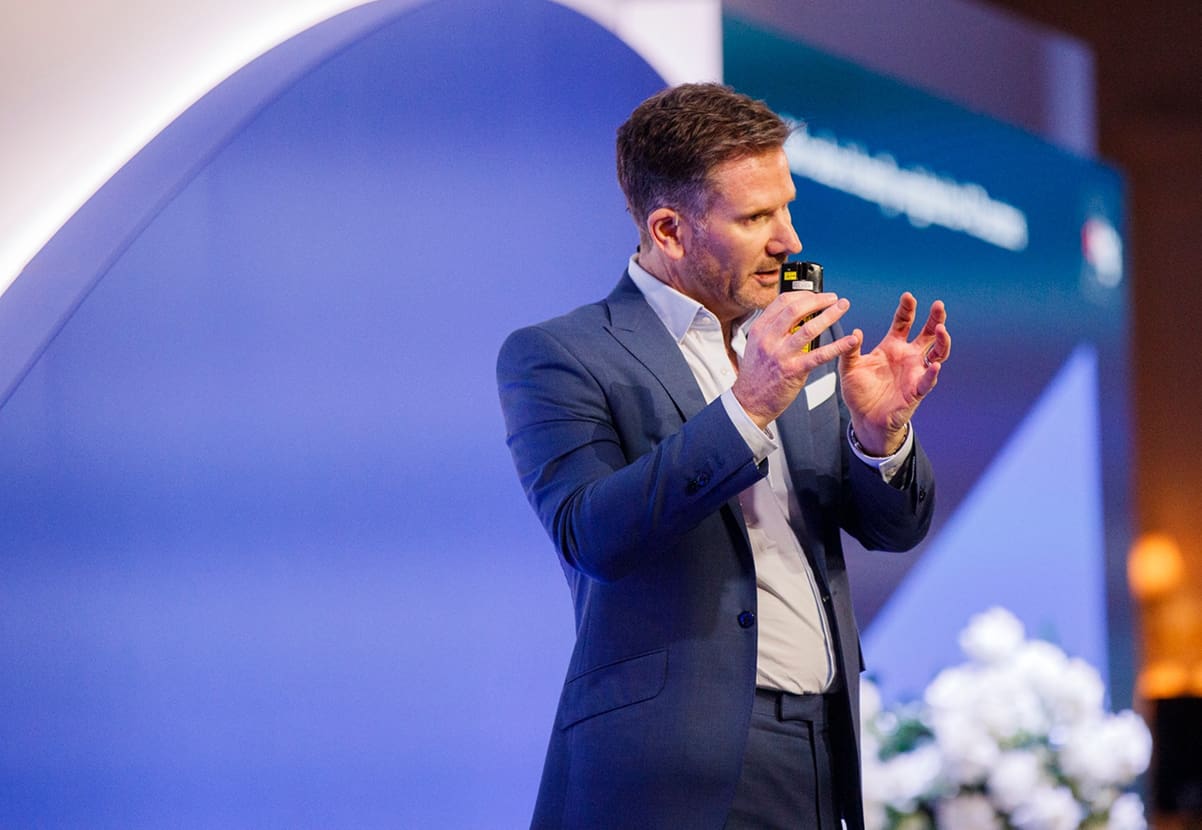
Orbit Podcast
Everything, everywhere, but not all at once: Matthew Brockman on what's really happening in software right now
Episode details
Orbit Podcast
A certain level of chaos is healthy: Franz Faerber on fighting bureaucracy and the importance of deep domain knowledge in AI
Episode details
Orbit Podcast
The corporate immune system: Google Cloud's Daniël Rood on building Europe's first AI team
Episode details
Orbit Podcast
Skin in the game: Professor Neil Lawrence on vulnerability, accountability and why the next generation will thrive.
Episode details
Orbit Podcast
The 3 speed problem: Oji Udezue on CPO leadership in the age of unlimited engineering
Episode details
Orbit Podcast
Fevered determination: Building Zalos from zero to enterprise in 5 weeks
Episode details
Orbit Podcast
Trust, velocity, and building the Answer Engine: Dmitry Shevelenko of Perplexity speaks to Farouk Hussein
Episode details
Orbit Podcast
The long road to the last mile: Nic Humphries and Matthew Brockman reflect on 25 years of Hg
Episode details
Orbit Podcast
AI, Control Points, and the Next Wave of Vertical SaaS with Tidemark Capital founder, Dave Yuan
Episode details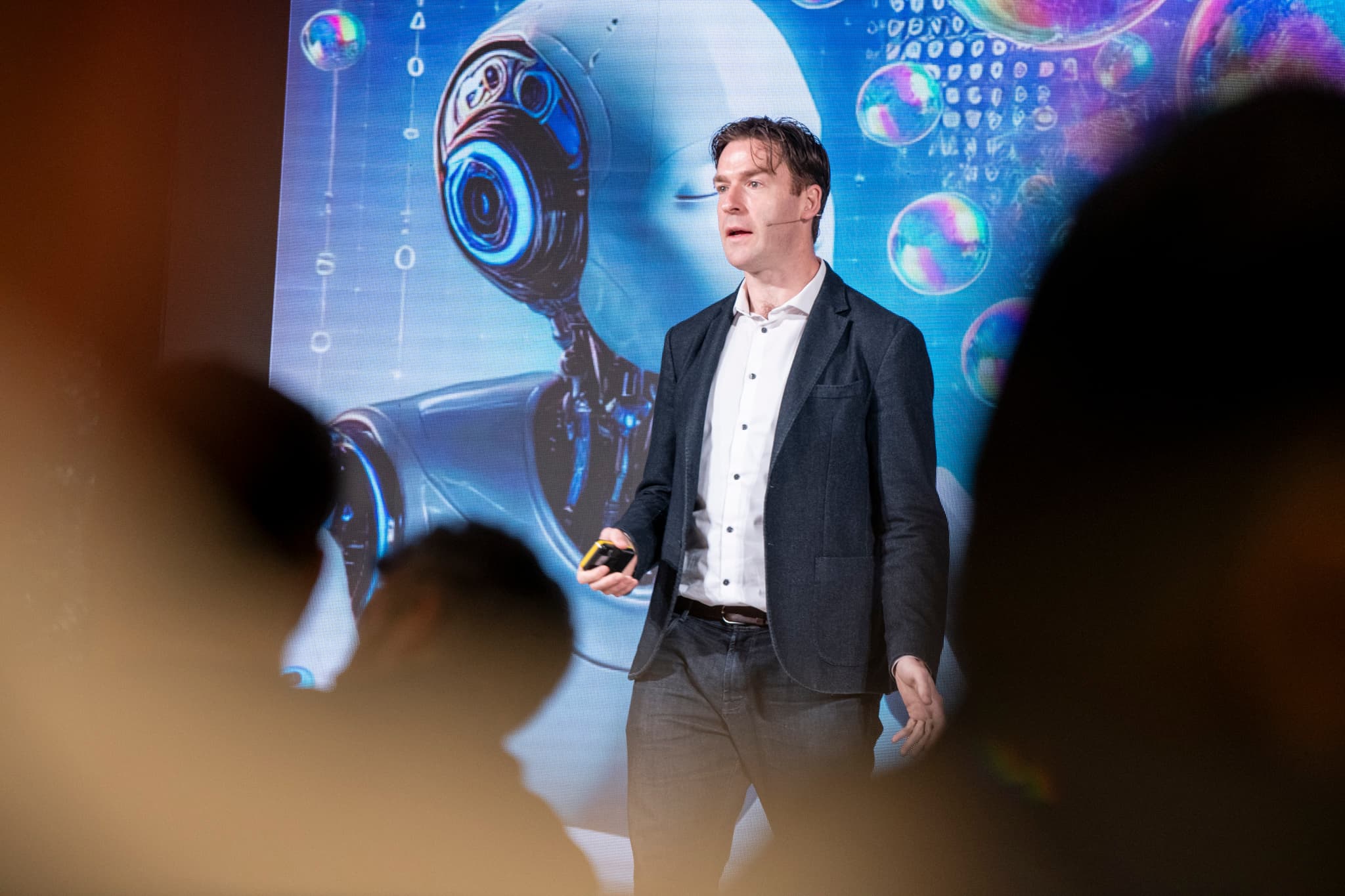
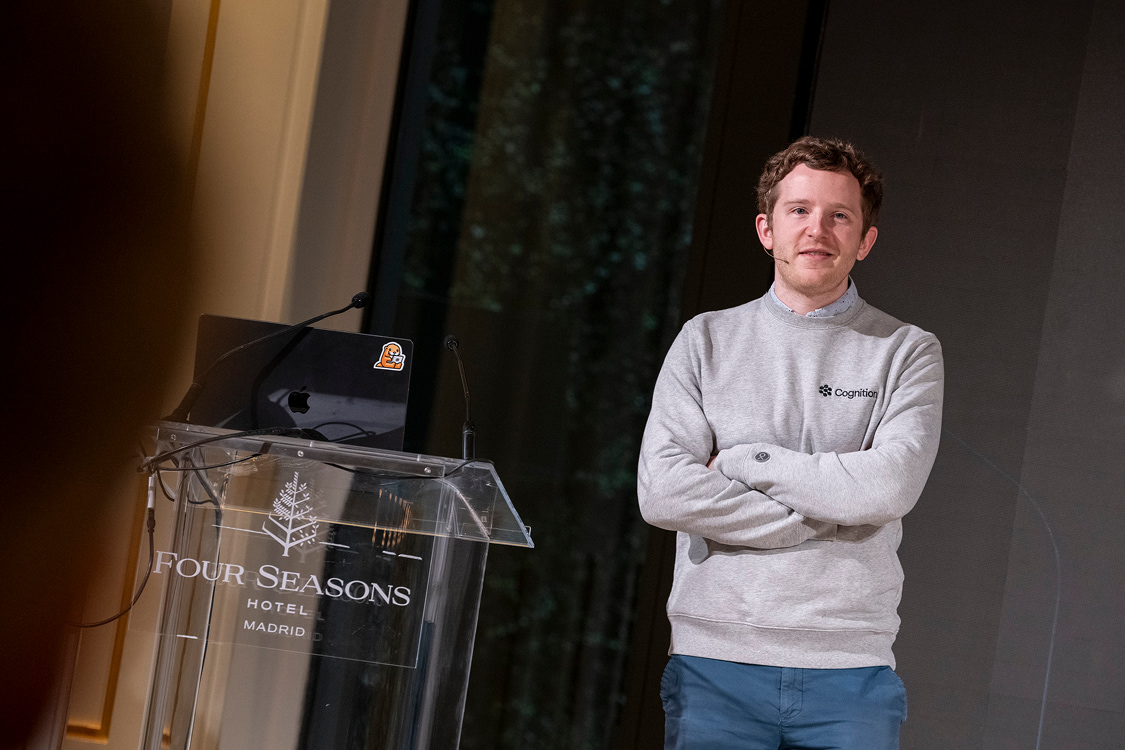

Orbit Podcast
A glimpse of the next generation: Zoe Zhao and Annalise Dragic of Azlin Software
Episode details

Orbit Podcast
The business case for AI: Brent Hayward of Salesforce, David Carmona of Microsoft & Nagraj Kashyap of Touring Capital
Episode details
Orbit Podcast
Mastering the billion-dollar software playbook: Joe Lonsdale of 8VC & Eric Poirier of Addepar
Episode details
Orbit Podcast